Our Team
|
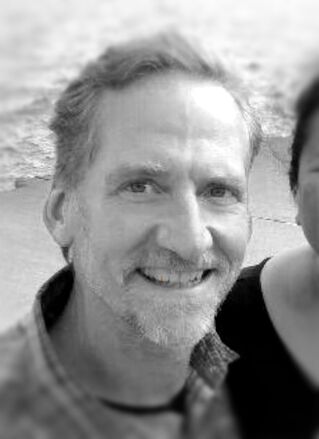
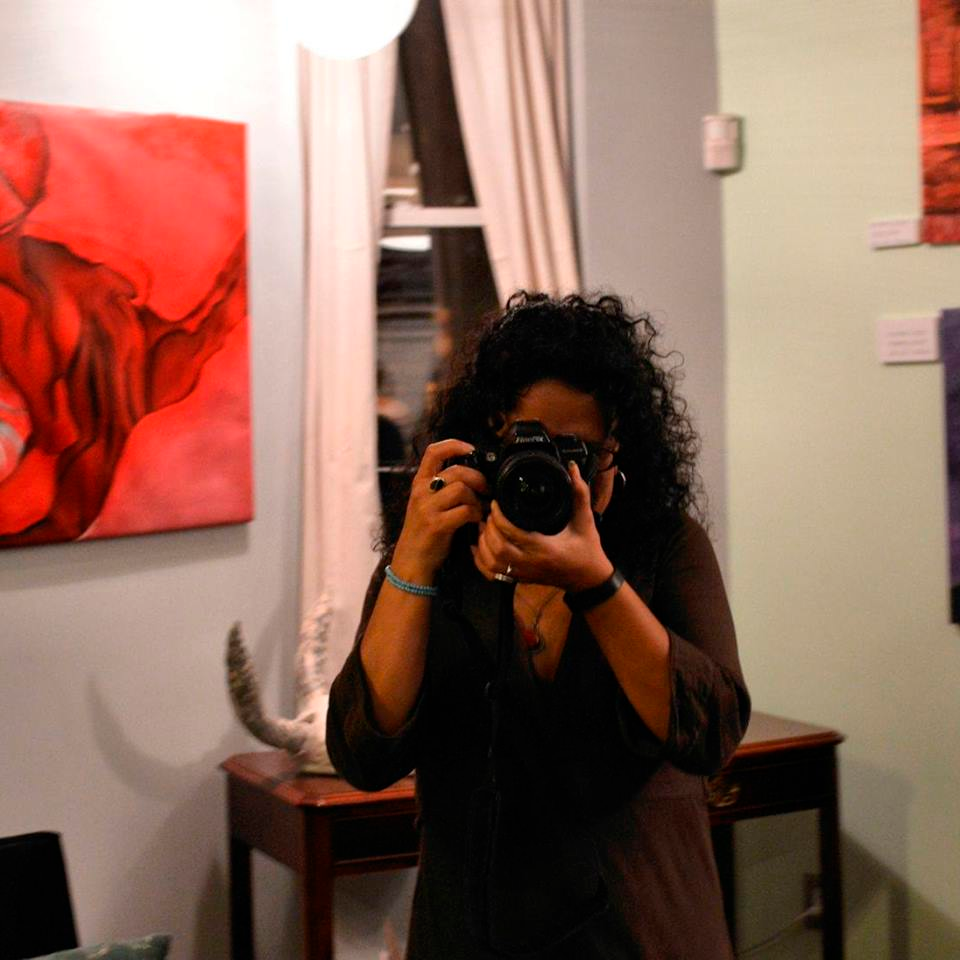
IVONNE CRUZ
Founder and Executive Director of Dragonfly Gallery and Creative Spaces, Ivonne is a Chicago-based artist, photographer, advocate, educator, and curator. Working in a variety of different mediums and content, Ivonne loves to create and collaborate. Inspired by every day’s beauty and expressing some of the challenges we all face. Ivonne has been an active member of the art community since 2002. She received her Master’s in Arts Education from The School of the Art Institute of Chicago and has been in arts education for the last 25 years. Currently working as the Associate Director of Learning Lab in the Ryan Learning Center at The Art Institute of Chicago. More of Ivonne's artwork can be found at: www.ivonnecruz.org |
Board Members
Jerome Thymes
Jerome Thymes is an artist, architectural designer, educator, and creative entrepreneur dedicated to inspiring creativity through art, design, and innovation. For more than 20 years, he has served as a Chicago Public Schools educator, teaching Architectural Drafting & Design to students on Chicago's South Side. He is passionate about creating a classroom environment that is engaging, supportive, and empowering—one that encourages students to develop confidence, think critically, and express their creativity.
Jerome is also the founder of Thymes Design Shop, a Chicago-based creative studio specializing in laser cutting, custom engraving, 3D printing, and multilayered wood artwork. By combining modern digital fabrication technologies with traditional craftsmanship, the studio produces distinctive, precision-crafted pieces, including personalized gifts, architectural models, custom signage, intricate mandala artwork, and one-of-a-kind commissioned designs.
Known for his attention to detail, craftsmanship, and innovative approach to design, Jerome transforms ideas into meaningful works of art that celebrate creativity and storytelling. His multilayered wood artwork has been exhibited at prominent Chicago festivals, including Wicker Park Fest, West Fest, and the Hyde Park Jazz Festival. His work has also been featured at the Black Boy Art Show, with exhibitions in Chicago, Washington, D.C., Atlanta, and Brooklyn, reaching audiences across the country.
Whether in the classroom or the studio, Jerome is committed to using design as a tool for education, inspiration, and community engagement, helping others discover the power of creativity to shape ideas, solve problems, and tell meaningful stories.
Jerome Thymes is an artist, architectural designer, educator, and creative entrepreneur dedicated to inspiring creativity through art, design, and innovation. For more than 20 years, he has served as a Chicago Public Schools educator, teaching Architectural Drafting & Design to students on Chicago's South Side. He is passionate about creating a classroom environment that is engaging, supportive, and empowering—one that encourages students to develop confidence, think critically, and express their creativity.
Jerome is also the founder of Thymes Design Shop, a Chicago-based creative studio specializing in laser cutting, custom engraving, 3D printing, and multilayered wood artwork. By combining modern digital fabrication technologies with traditional craftsmanship, the studio produces distinctive, precision-crafted pieces, including personalized gifts, architectural models, custom signage, intricate mandala artwork, and one-of-a-kind commissioned designs.
Known for his attention to detail, craftsmanship, and innovative approach to design, Jerome transforms ideas into meaningful works of art that celebrate creativity and storytelling. His multilayered wood artwork has been exhibited at prominent Chicago festivals, including Wicker Park Fest, West Fest, and the Hyde Park Jazz Festival. His work has also been featured at the Black Boy Art Show, with exhibitions in Chicago, Washington, D.C., Atlanta, and Brooklyn, reaching audiences across the country.
Whether in the classroom or the studio, Jerome is committed to using design as a tool for education, inspiration, and community engagement, helping others discover the power of creativity to shape ideas, solve problems, and tell meaningful stories.
Rossy Cruz
Bio
A Chicago-based philanthropist, she is deeply involved in supporting nonprofit organizations across the city. A retired immigrant from Mexico, she has dedicated much of her time and generosity to advancing the arts and strengthening Chicago’s cultural community.
Solo Exhibition Artists
2026
Aug
Rachel Lee
Artist Statement
Through my work, I observe the link between life's uneventful moments and nostalgic memories. I draw inspiration from my childhood in the Miami suburbs: it started by taking pictures of the neighborhood where I was born and raised on daily walks. Surrounded by townhouses, canals, and overpasses, life barely moved, every day felt the same, and I was constantly looking for ways to get out of the swamp and the chaotic home I lived in. I was a homeschooled kid from kindergarten until graduation, which meant there was too much free time. That free time was spent on video games, alternative rock, and finding any reason to leave the house to prowl around the neighborhood. Everything was at once stagnant and changing: chain-linked fences overgrown with plants and cracked sidewalks, streetlights that lit us under an amber haze every night, and the lakes I spent hours staring at. There were always small moments to notice in the trees, someone's lawn, lost trinkets on the ground, or someone noticing I was looking. All the while I was planning for the day I would leave Florida permanently. These are places that I miss now and with distance from the past, I look back with fondness for all the mundane details that are no longer part of my daily life.
After moving to Chicago, the work has extended into views of rural cemeteries as they share the same spirit of fleeting significance. Wandering exploration, photographing local sites, and pop culture research are part of my practice, informing my paintings and mixed media collages.
Through my work, I observe the link between life's uneventful moments and nostalgic memories. I draw inspiration from my childhood in the Miami suburbs: it started by taking pictures of the neighborhood where I was born and raised on daily walks. Surrounded by townhouses, canals, and overpasses, life barely moved, every day felt the same, and I was constantly looking for ways to get out of the swamp and the chaotic home I lived in. I was a homeschooled kid from kindergarten until graduation, which meant there was too much free time. That free time was spent on video games, alternative rock, and finding any reason to leave the house to prowl around the neighborhood. Everything was at once stagnant and changing: chain-linked fences overgrown with plants and cracked sidewalks, streetlights that lit us under an amber haze every night, and the lakes I spent hours staring at. There were always small moments to notice in the trees, someone's lawn, lost trinkets on the ground, or someone noticing I was looking. All the while I was planning for the day I would leave Florida permanently. These are places that I miss now and with distance from the past, I look back with fondness for all the mundane details that are no longer part of my daily life.
After moving to Chicago, the work has extended into views of rural cemeteries as they share the same spirit of fleeting significance. Wandering exploration, photographing local sites, and pop culture research are part of my practice, informing my paintings and mixed media collages.
Sarina Swalm
Bio
Sarina is a Florida born artist living and working in Chicago. After Chicago’s second fire, excavation of the river and city foundation uncovered clay deposits. When fired into bricks, the limestone and glacial debris in the clay resulted in an “unfavorable” coloration: light pinks, yellows, and oranges. Due to its unique proximity to the ancient glacial lakes, each brick made of Chicago clay is a geological and technological palimpsest: two hundred years of brick making technology, nine thousand years of ceramic tradition, and millennia of geological sedimentation. And yet! These bricks, though they form some of the very buildings we inhabit, go largely unnoticed. Sarina’s work is a collection of debris. It is through materials like ceramic and color pencils that she engages with the quiet histories of the mundane. Her work just like a glacier is a quiet yet endless addition of strata in search of what she describes as an encounter with the common or the beauty hidden in the everyday. Each sculpture and drawing comes from an
archeological approach layered with memory, plein air observation, and compression of time. Her art, like the common Chicago brick, hold entire histories within them and with a small amount of care and curiosity towards “the other” we can reveal a hidden world.
Sarina is a Florida born artist living and working in Chicago. After Chicago’s second fire, excavation of the river and city foundation uncovered clay deposits. When fired into bricks, the limestone and glacial debris in the clay resulted in an “unfavorable” coloration: light pinks, yellows, and oranges. Due to its unique proximity to the ancient glacial lakes, each brick made of Chicago clay is a geological and technological palimpsest: two hundred years of brick making technology, nine thousand years of ceramic tradition, and millennia of geological sedimentation. And yet! These bricks, though they form some of the very buildings we inhabit, go largely unnoticed. Sarina’s work is a collection of debris. It is through materials like ceramic and color pencils that she engages with the quiet histories of the mundane. Her work just like a glacier is a quiet yet endless addition of strata in search of what she describes as an encounter with the common or the beauty hidden in the everyday. Each sculpture and drawing comes from an
archeological approach layered with memory, plein air observation, and compression of time. Her art, like the common Chicago brick, hold entire histories within them and with a small amount of care and curiosity towards “the other” we can reveal a hidden world.
Sept.
Alison Mosher
Bio
Alison Mosher (b. 2001) holds a BFA in Painting and an Art History minor from Philadelphia’s Tyler School of Art, and is currently pursuing an MFA at the School of the Art Institute of Chicago. She specializes in oil painting and explores memory and the withholding of information through the creation of burials. Mosher is interested in skeletons for their anonymity and representation of loss. She aims to show the many layers of loss experienced with memory and how those losses are always present, either as people or moments, in a graveyard-like collection.
Artist Statement
I explore the layers of loss experienced throughout my life, as well as the ways specific moments and people imprint on me. My paintings draw from my family archive of photographs to honor the ways that memories have shaped me, while reframing them to include the skeletons of loss that haunt them. They are self portraits of my reflections on belonging and disconnection.
My work utilizes the process of cyanotype, which physically imprints the photograph onto the canvas as a backdrop of truth, and "oil wiping," which involves quickly removing a layer of oil paint to reveal parts of a protected layer beneath. Both processes have hazy qualities and imperfections to question truths and withhold information. I create burials to show snippets of a life and represent the preciousness of the final state of burial and remembrance.
I explore the layers of loss experienced throughout my life, as well as the ways specific moments and people imprint on me. My paintings draw from my family archive of photographs to honor the ways that memories have shaped me, while reframing them to include the skeletons of loss that haunt them. They are self portraits of my reflections on belonging and disconnection.
My work utilizes the process of cyanotype, which physically imprints the photograph onto the canvas as a backdrop of truth, and "oil wiping," which involves quickly removing a layer of oil paint to reveal parts of a protected layer beneath. Both processes have hazy qualities and imperfections to question truths and withhold information. I create burials to show snippets of a life and represent the preciousness of the final state of burial and remembrance.